
Bridge Assistant
Chief of staff meetings: run the leadership team's operating rhythm
A chief of staff rarely owns the work that comes out of meetings. What they own is the thread between them: who committed to what, which decisions were made and which initiatives are stuck. Keep one commitments list, ask the same status question every week and record decisions with their reasons.
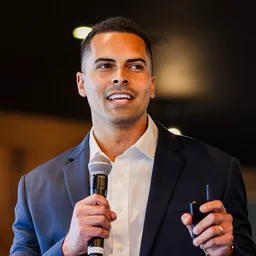
What a chief of staff needs from meetings
A Harvard Business Review article on the role has the subtitle "CEOs need more support than an executive assistant can provide." Treat meetings as one place that support shows up. The right ones happen, with the right inputs, and their outcomes do not evaporate.
A useful habit is to assume you are not the decision maker in the room. Your job is then to make each decision and its follow-through visible to everyone who owns a piece of it.
| Meeting | Chief of staff's job | What to record |
|---|---|---|
| Leadership team meeting | Set the agenda, keep time, read back commitments | Decisions, owners, dates, items carried forward |
| Initiative review | Ask each owner the same status question | Status, blocker and the decision needed |
| Quarterly planning | Gather inputs and keep the process on schedule | Objectives chosen, what was cut and why |
| All-hands | Collect questions and own the written follow-up | Answers given, and questions still open |
The leadership meeting: open with last week's commitments
Start every leadership meeting by reading the open commitments from the last one, before any new topic. People learn quickly that what they say in the room will come back.
Close by reading new commitments aloud, each with one owner and a date. If two people think they own an item, nobody does.
- Keep one list for the whole team, not one per meeting.
- Carry an unfinished item forward with a new date, or drop it on purpose and say so.
- Keep decisions separate from tasks, because a decision should still be findable after its task is done.
Initiative reviews: ask every owner the same question
When each owner reports in their own format, you compare stories instead of status. Pick one question for every initiative, such as "What do you need decided, and by when?"
The answer separates initiatives that are moving from those waiting on someone. Write the blocker next to the name of the person who can clear it.
Planning cycles: keep the reasoning, not just the list
Quarterly planning has a long tail. Months later, someone asks why a goal was dropped, and the list alone cannot answer.
Record what was cut and the reason beside what was chosen. A useful habit is for the chief of staff to keep this record.
Example: three weeks of one commitment
This example is illustrative. At a fictional company, Northwind, the leadership team agrees in week one to decide on a new support tool.
| Week | What the chief of staff does | What the record shows |
|---|---|---|
| 1 | Logs the commitment with one owner and a date | "Choose support tool: head of support, by the 28th" |
| 2 | Opens the meeting by asking about it | Owner reports two vendors shortlisted and asks for a budget decision |
| 3 | Puts the budget decision first on the agenda | Decision logged with the budget and the reason; the task moves to procurement |
Keep the thread between meetings in Bridge
Bridge records meetings you host on Bridge and captures Zoom, Google Meet and Microsoft Teams calls. Each meeting gets structured notes with a summary, decisions and follow-ups, plus a speaker-labeled transcript. Action items also collect in the Action items list on Home.
With auto-sharing off, notes stay private to the meeting owner until shared. When you do share, you choose who receives them: attendees or your whole workspace.
- Workspace Assistant: ask across all your notes, narrow by date, people, labels or space, and follow source links back to the meetings each answer drew from.
- Spaces: keep one team's meetings, participants, companies and files together, with an Assistant scoped to the space. Space owners and members can use it; guests cannot.
- Meeting briefs: the Preparation tab shows the agenda, participant context and previous action items from earlier Bridge meetings, once you connect a calendar.
- Custom agents: you can create an agent that runs on a recurring schedule or after every meeting. A digest of open commitments is one idea to try.
- Plans: Starter includes unlimited meeting notes, action items, the transcript and note sharing, with limited meeting history. The workspace Assistant, collaborative Spaces, agenda and history in briefs, participant context, custom agents and agent triggers are on Professional and Business.
Sources & further reading
- Harvard Business Review: The Case for a Chief of Staff ↗
- Bridge help center: Notetaking ↗
- Bridge help center: Share meeting notes ↗
- Bridge help center: Assistant capabilities ↗
- Bridge help center: Spaces ↗
- Bridge help center: Agents ↗
- Bridge help center: Preparation ↗
- Bridge help center: Capture a virtual meeting outside Bridge ↗
- Bridge pricing ↗
- Bridge help center: Sharing Spaces ↗