
Bridge Assistant
Run win-loss interviews and turn them into findings
A win-loss interview is a short conversation with a buyer after they chose you or a competitor. Run them with someone other than the rep, ask the same open questions each time, then code the transcripts into themes that sales and product can act on.
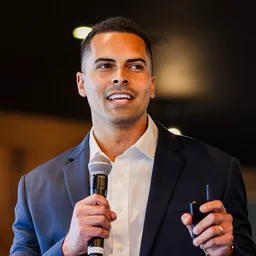
What a win-loss interview is for
Your CRM records that a deal was lost, and usually a one-word reason. A win-loss interview asks the buyer how they actually made the decision: who was involved, what they compared and what tipped it.
It differs from product research interviews, which study how people work, and from evaluating vendors yourself. Here you are the vendor, and the buyer tells you how you were judged.
Before: choose deals, interviewers and consent
Interview both wins and losses, or you'll only learn half the story. Reach out soon after the decision, while the buyer still remembers the details.
Pick an interviewer who wasn't on the deal, such as a product marketer or someone from another team. Buyers may be more candid with someone who didn't sell to them, and the rep isn't defending their own work.
- Choose deals from a set period, with a mix of sizes, segments and competitors.
- Tell the rep first, and ask who on the buying side made or shaped the decision.
- Ask for 30 minutes, and say the goal is to learn, not to reopen the deal.
- Ask permission to record, and explain who will see the recording and how quotes will be used.
- Give each interview a code, like W3 or L5, so findings can be shared without names.
During: an interview guide
Use the same guide in every interview so answers compare. Ask open questions and follow up on specifics. Nielsen Norman Group warns that leading questions imply the answer you want and produce biased or false responses.
These questions are illustrative. Adapt them to your product and sales process.
- What was happening that made you start looking?
- Who was involved in the decision, and what did each person care about?
- Which options did you consider, and how did you narrow the list?
- What stood out, good or bad, about our sales process?
- What almost made you choose differently?
- If you could change one thing about our offer, what would it be?
During: let the buyer tell the story
Ask the buyer to walk through the decision in order, from first search to signature. A timeline surfaces moments they wouldn't think to mention when asked for a reason.
Don't argue or correct them, even when they misunderstood your product. That misunderstanding is a finding. Note it, and the moment it happened.
After: code each transcript
Read each transcript within a day or two and tag passages with codes. NN/g describes thematic analysis as tagging observations and quotations with codes, so themes become visible. A theme emerges when related findings appear across several participants.
Keep a shared code list with a one-line definition for each code, so two people tag the same way. Pull short quotes with the interview code and timestamp.
- Decision process: who decided, and when.
- Price and packaging: cost, budget fit, contract terms.
- Product fit: features that mattered, gaps that hurt.
- Competitor: who else was considered, and why they won or lost.
- Sales experience: responsiveness, demos, trust.
Build a synthesis table
Once you have a batch of interviews, group the codes into themes and count deals, not percentages. The example below is illustrative, for a fictional company, Acme.
| Theme | Wins | Losses | Example quote | Owner |
|---|---|---|---|---|
| Onboarding plan won trust | 5 of 7 | 1 of 6 | W2: "They showed us week one, not just the demo." | Sales lead keeps the onboarding plan in every proposal |
| Missing SSO blocked IT approval | 0 of 7 | 3 of 6 | L4: "Security said no before we compared anything else." | Product manager reviews SSO priority |
| Pricing page confused buyers | 2 of 7 | 2 of 6 | L1: "We couldn't tell which plan we needed." | Marketing tests a plan comparison |
Running win-loss interviews in Bridge
Host interviews on Bridge, or capture them on Zoom, Google Meet or Microsoft Teams with Bridge Agent, which the host admits. The Mac desktop app records bot-free. Each meeting gets structured notes and a speaker-labeled transcript you can search.
- Tag each interview with custom labels such as win-loss, won and lost, then filter the Inbox by label.
- On Professional and above, put a quarter's interviews in a Space and ask its Assistant questions across all of them.
- Space owners and members can use the Space Assistant, and each person's chats stay private. Guests can't use it.
- On Professional and above, export transcripts as PDF, Word or Markdown to code them in another tool.
Prompts to try on the Space
These prompts are examples to adapt. Treat each answer as a lead, and confirm it in the transcript before it goes in the synthesis.
- Which competitors did buyers mention, and what did they say about each?
- List every reason a buyer gave for choosing someone else.
- Where did buyers mention pricing or contract terms?
What win-loss interviews can't tell you
A handful of interviews shows patterns worth checking, not proof. Buyers also give the reasons they remember or are comfortable sharing.
Compare themes with your CRM data, such as loss reasons by segment and competitor, before you change pricing or the roadmap.
Sources & further reading
- Nielsen Norman Group: Avoid leading questions to get better insights from participants ↗
- Nielsen Norman Group: Analyze qualitative data: thematic analysis ↗
- Bridge help center: Capture a virtual meeting outside Bridge ↗
- Bridge help center: Host a meeting on Bridge ↗
- Bridge help center: Notetaking ↗
- Bridge help center: Labels ↗
- Bridge help center: Spaces ↗
- Bridge help center: Assistant capabilities ↗
- Bridge pricing ↗